

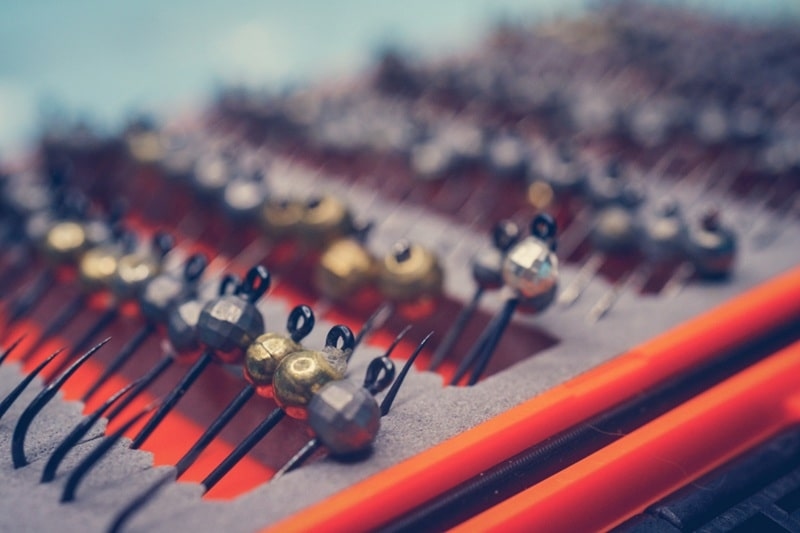
Jigging fishing is one of the most thrilling and efficient methods to catch fish, primarily when they are hooked on the bait and ready to pounce. No matter if you are fishing in rivers, lakes, or deep seas, understanding the principle of jigging will definitely be your key to success.
This manual unveils how jigging can make fish bite on the spot, the use of perfect lure control for jigging, and how you can modify the technique to suit both saltwater and freshwater fishing.
Jigging fishing technique involves working a weighted lure vertically or a few inches above the water to mimic the appearance of a struggling baitfish. It is not a typical method that requires you to retrieve your line at a steady rate.
Instead, it calls for the action of lifting the rod tip and, at the same time, letting the lure fall on its own. The predator fish get the signals not only from their eyes but also from their lateral line system, which the up-and-down motion affects.
One can hardly conceive a situation where a predatory fish wouldn't react quickly to a jigging lure. Basically, jigging targets their home base - instincts by presenting a prey that is clearly injured or in a panic. The sharp move upward is what mostly grabs the attention, followed by the slow and effortless plummet of the bait.
Another thing that makes jigging so successful is that it allows the lure to be in the strike zone for an extended period of time. A jigging lure will not go past the fish in a flash, but will stay closer to them, thus providing a higher probability of a reaction bite. Even if the fish are lying in wait, that is, they will not eat out of hunger but instinct, thus they may still attack.
Vertical jigging can be a great solution when you have fish concentration at certain layers or near the bottom of the water. Thus, this method enables a direct depth check that is done through the bait position underneath the boat. Significant improvements in hook-up rates can be realized as a result of applying tested and proven vertical jigging tips.
Consistent vertical jigging tips usage makes your responses much quicker, and thus, you are able to catch more strikes that are happening during the drop and not miss them.
Lure action control greatly determines how your jig will be perceived by the fish underneath the water. They only react to the most natural movement, and subtle changes in your rod handling can have a significant impact. If you are doing too much, the fish might think that your jig is not a real one, while if you are doing too little, they might simply ignore it.
Lure action control is made easier if you know how to balance your lifts with a controlled slack on the fall of your line. The sudden snap of the rod can produce both flash and vibration, while quieter lifts give you a slow and gentle flutter. It is equally important to know when to stop, as well as most strikes actually happen when the jig is not moving and sinking freely.
Saltwater jigging is the most common method to catch incredible fast and strong predators such as tuna, grouper, and red snapper. The depth, current, and water movement greatly affect the behavior of the jig, so it is necessary to keep changing it. Heavier jigs are mostly used in saltwater jigging because of the longer distances.
Quick, rhythmic movements may simulate a baitfish that is trying to get away in the open water, while near reefs and wrecks, slow and more deliberate movements work better. Strong tackle is a must, as saltwater species generally put up an aggressive fight when they are hooked.
By using the right jig weight and motion, saltwater jigging turns out to be a very effective method for offshore fishermen.

Freshwater jigging works well for fish like bass, walleye, and crappie. Compared to the ocean, freshwater environments normally call for a more subtle method. Smaller jigs and controlled movements are typically better in smooth conditions.
When freshwater jigging is on the sides of the lake or river, next to the submerged plants, or on the rocky bottom, fish frequently position themselves near these spots to be able to surprise their prey. Giving gentle lifts and then slowly dropping can convince really cautious fish to hit your bait.
Freshwater jigging is a great tool for patient and precise anglers who like to perfect their technique.
Following a clear jig selection guide will help you to match your lure with the fishing conditions. A proper jig can improve sinking speed, the movement of the lure, and visibility, all of which are very important to get more bites.
By adhering to a dependable jig selection guide, it is simpler to tweak your setting, and you get more chances to be successful consistently.
A well-balanced setup increases both sensitivity and control while jigging. A sensitive rod enables you to feel the slightest taps, and a fluid reel assists in line tension management during the fall. A lot of anglers choose braided line as it is very sensitive and has almost no stretch.
Your equipment has to be of the same standard as the surroundings. For instance, Saltwater jigging generally needs heavier rods and reels, whereas freshwater jigging, on the other hand, can be done with lighter and more flexible gear. A correct balance lessens your energy and makes it easier to control your lure during long fishing sessions.
Quite often, many anglers who try to master the jigging technique make small but significant mistakes that prevent them from succeeding. Among the errors most commonly made is the habit of doing the same move over and over without any change. Fish can get bored with the same thing very quickly. Another error is not being alert enough during the descent of the lure when most bites take place.
Overworking the jig is also one of the most frequently committed mistakes. Moving the jig too much can easily drive away the fish, the exact opposite of what you want. If you are more sensitive to the line's subtle feedback and change your rhythm accordingly, you will see a great difference.
Jigging is one of the most efficient fishing methods that brings in a wide range of aggressive strikes in different fishing settings. It is a fact that the fish's behavior is influenced by motion, timing, and depth, and thus, the fishers can adjust their tactic to get more bites.
Whether performing saltwater jigging offshore or freshwater jigging locally, jigging is still a strong and versatile method if combined with patience and precision.
Absolutely, jigging can be easily handled by newbies. They can quickly learn simple rod lifts and controlled drops, which are both easy and very effective.
A lot of strikes take place when the lure is falling; therefore, it is very important to be ever watchful during the drop.
It is possible for some jigs to be used in both, but usually, saltwater jigging is done with stronger and corrosion-resistant jigs.
Early morning and late afternoon are the most productive times; however, jigging can be done at any time when fish are at particular depths.
This content was created by AI