

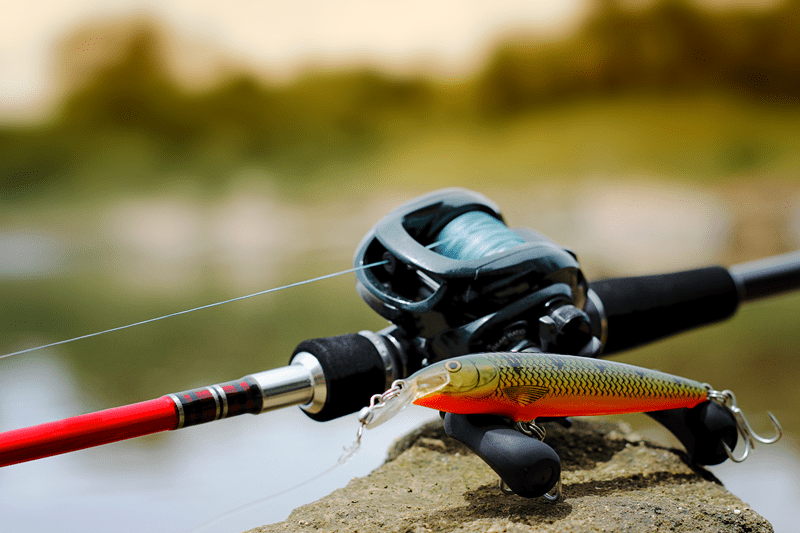
Backlash is the main reason why many anglers are reluctant to use baitcasting reels. A fish line that is tangled in the spool can definitely be a nightmare of a fishing trip, especially for newbies. Because of this, many of them give up on baitcasters too quickly, too.
The fact is that the baitcasting fishing technique is quite simple if you realize the mechanism of the reel and how to control it properly. This guide walks you through each step, allowing you to have fun with baitcasting and avoid frustration.
The main reason that the baitcasting fishing technique keeps being in demand is that it allows the angler to cast with more accuracy, power, and control. By using them, you can put the lures exactly where the fish are most likely to hide, such as near weeds, docks, or underwater trees.
When using the baitcasting method, it is mostly advantageous to do so in close areas where the need for precision is greater than that of distance.
Backlash is an event where the speed of the spool is larger than that of the line that comes out from the reel. To be more specific, when that occurs, the small circles of the line are formed in the vicinity of the reel, and they very soon become entangled. The cause of the majority of backlashes is setup problems rather than bad caster skills.
The most common causes of backlash are incorrect tension settings, low brake control, strong casting, and using a lure that is too light for the reel. Knowing the reel braking basics helps to slow the spool just enough so that it can be matched with the speed of the lure. When the speed of the spool and the pulling of the line are in unison, the chances for backlash are minimized.
The proper gear will make the learning process of baitcasting a lot more manageable. Those who are new to the sport should put more of their attention on balance and control instead of getting advanced equipment right away. The perfect gear for a beginner would be a medium or medium-heavy rod with a good baitcasting reel.
The use of an appropriate baitcaster setting will go a long way in the early stages of the sport, as it will keep you from getting frustrated and from miscasting. You can focus on developing proper casting habits. Monofilament is a more forgiving line and easier to handle if there are small tangles.
Correct reel setup is the basis of the baitcasting fishing technique. Firstly, attach the lure to the line and screw the spool tension knob until the point that the lure is no longer falling. Step by step, loosen it until the lure falls smoothly and stops when it hits the ground.
Then, change the braking system. Position it at a medium or higher level when you are still learning. This leads to additional control and lessens the overruns of the spool. The baitcaster that is adjusted in a correct way makes casting easier and helps to raise the user's trust in the early stage.
The most frequent problem that a lot of anglers encounter while using a baitcasting technique is that they employ an excessive amount of force. Force is not needed. The most efficient way is to use a smooth, controlled motion of the hand, which also helps to control the spool.
Focus on a steady arm movement and a clean stop at the end of the cast. Do not snap the rod or force the lure forward. Good casting control tips always emphasize smoothness over speed, especially for beginners. The rod is loaded naturally when you are smooth with your movement, the lure goes farther, and you exert less effort.
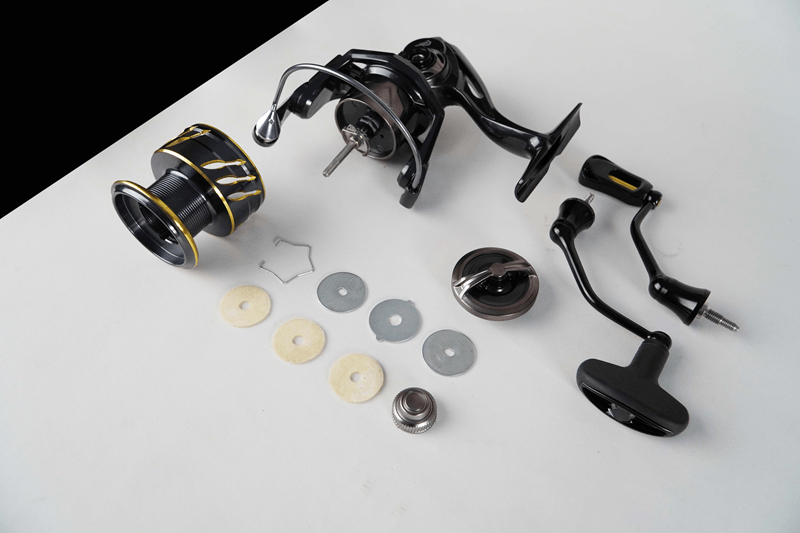
Among the skills involved in using a baitcasting reel, thumb control is possibly the most noteworthy one. Throughout the cast, the thumb works as a manual brake enabling the control of the speed of the spool from the beginning to the end.
Training with these casting control hints leads to muscle memory and avoids sudden spool overruns. After a while, thumb control is done automatically, and it enhances both precision and confidence.
Practice is most effective in an open place, for example, a field, your own backyard, or a beach with sufficient space. There, you can concentrate on technique without the need to constantly watch for obstacles. Begin with short throws and slowly stretch out your control as well as the distance of your throws.
Continuous practice deepens your knowledge of the baitcasting technique, and you become more aware of how your reel reacts to different moves. The main thing is to be consistent rather than practicing for long hours.
The main reasons why bass anglers choose baitcasters are their power and accuracy. Closely controlled bass baitcasting enables the angler to put the lure right next to the cage where bass are waiting to attack. Besides, it gives better command while working with jigs, crankbaits, and soft plastics.
Baitcasters are perfect when used with heavy lures, and when the goal is to pull a fish that is hiding in the weeds or around the structure. For most anglers, bass baitcasting is the main reason why their hook-setting power and landing success improve, especially in difficult situations.
After gaining confidence, you can start adjusting your reel to suit your needs. Brake pressure can be gradually lowered to get longer casts, but with control still retained. You should only make small moves and thoroughly check each of them.
Knowing the basics of reel braking enables you to change the settings to work with different lure weights, casting styles, and weather conditions. Understanding how your brakes react will help you control the situation if it changes.
The most difficult thing when baitcasting is probably the wind. A sudden strong wind can slow down the lure in its flight, and if the spool is not stopped, a backlash will occur.
Some of the useful modifications are:
These adjustments are based on good casting control skills and condition awareness. Small changes in the work done help to keep your casting smooth, even in bad weather.
When you have mastered the basics of casting, you may consider learning pitching, flipping, and skipping. These techniques help you when fishing in shallow water or in dense cover. Advanced casting skills need exact control and patience.
You should have your basic casting skills mastered before trying other advanced techniques. With regular training, these techniques will raise your precision and give you more fishing options without the risk of increased backlash.
Many anglers make a mess of things because of the very simple mistakes they make, such as overfilling the spool or not paying attention to brake adjustments. Another common mistake that leads to backlash is casting too aggressively.
You can avoid these problems if you closely monitor your baitcaster setup and keep a smooth rhythm. Small fixes add up to a big effect over time.
Learning to use a baitcaster is not a problem that gives you sleepless nights. Baitcasting is a fishing technique that gives back to the patient with improved accuracy, stronger hook sets, and better lure control.
In fact, it turns into a great skill that makes your fishing more enjoyable once you have mastered it.
Baitcasting might be a bit hard at the very beginning; however, correct setting and regular practice will make it easy for a beginner.
The majority of anglers notice a great improvement after only a few focused practice sessions.
Sure, but if the lures are light, then proper brake adjustment and sufficient experience are necessary.
Bass that are hidden in cover can be honestly exposed by a skilled baitcasting angler who makes great use of the advantages of the method - the accuracy, power, and control. Consequently, most of the bass fishermen utilize baitcasting for bass fishing.
This content was created by AI