

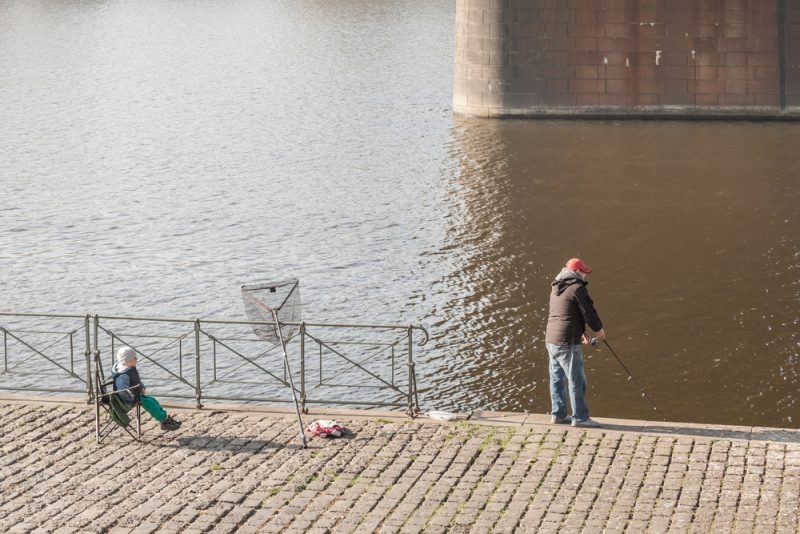
To be a successful fisherman is not just about going to a fishing hole and throwing in a line. Other variables can affect your catch, such as the water conditions and quality, the time of day, the season, and the specific behavior of the fish and other wildlife it may attract.
Knowing how river fishing vs lake fishing differ allows the avid fisherman to make better decisions in the optimal techniques and equipment to use, making the experience more enjoyable and more lucrative.
River fishing versus lake fishing really varies in three areas: water flow, fish behavior, and techniques. Rivers have current, so the fish behave differently. Lakes don't have current, and fish tend to stay in one place; cover is key.
Moving water fishing requires some knowledge of the main currents of the river and how to find a resting spot while feeding. Fish like to stay near rocks, bends, and slow-flowing areas of a river.
Still water fishing involves finding underwater structures, weed beds, and changes in water depth. There is less water disturbance, and fishing is more about fishing to the fish rather than the fish themselves.
Fish behavior is one of the major factors in fishing. Fish respond differently to hot and cold water, the availability of their food, and changes in their environment.
A decent freshwater fishing guide incorporates these habits because the likelihood of success is increased by being aware of the location of the fish.
The species available may change depending on your location and habitat. Both lakes and rivers can be superb fishing grounds, but some fish like the river while others prefer lakes.
Many of the fish most sought after in river fishing thrive in moving water, such as:
In the still lakes, there is often a chance of catching some species that favor the calmer environments, including:
Having an idea of the species you're likely to be fishing for can influence the choice of bait, lure, and method of fishing. Each species requires its own approach, so preparation is key.
Proper gear can certainly make your day fishing a pleasure, as well as help you bring in a great deal more fish. When picking out gear, keep in mind that there is a distinction in terms of what will work for the angler wading across a river compared to what’s beneficial sitting down along a lake’s border. Flowing water. Also, using stronger lines and smaller lures can often be very effective.
For lake fishing, the tackle might include devices that allow the angler to fish at various depths. One might use a bobber or a bottom rig while fishing or fish at various depths with special lures.
Most freshwater fishing guides will advise you to buy gear according to the type of fish, fishing style, and water conditions.
If you want to be successful, you have to be patient and observant, and you have to be able to adapt. To be successful at fishing in lakes or rivers, it's understanding your environment. Here are some useful tips for fishing in rivers and lakes:
Before casting, the water should be examined carefully by river anglers. Certain locations would be dominated by fish where they can camp. Important tips include:
Moving water fishing is a lot easier if anglers understand how fish respond to currents and how they feed in relation to them.
Lake fishing is all about locating the places where the fish are feeding; they tend to use the same feeding areas repeatedly. Lakes tend to be pretty large, so finding those locations may take some searching. Useful tips include:
Fishing in still waters is well suited to the patience of those who wish to study the behavior and patterns of fish through several seasons.
Weather can greatly affect a fish's activity in lakes and rivers. Water temperature, sunlight, wind, and rain can all affect a fish's location and feeding habits. After a storm, rivers can change very quickly because of the water flowing through them, affecting what you can see and where the fish are.
Though lakes tend to take a little longer, it's just the change in temperature causing fish to move from shallow to deep water. It is useful to observe weather conditions in order to choose when and how to fish.
It's common for anglers to debate whether river fishing vs lake fishing is better. Ultimately, the best choice really depends on what you want to do from fishing, your experience, and technique. Both waterways present unique challenges to the angler in terms of reading the water, understanding the fish habitat, and ultimately catching them.
No matter if you like fast-moving waters or tranquil lakes, understanding how they differ can make each fishing trip that much more fun.
Lake fishing is the easiest approach for new anglers due to the still nature of the water, which permits easy practice of standard techniques and avoids difficulties and complications like currents present in river fishing. Nevertheless, new anglers can become expert river fishers given good mentorship.
Fish behave in different ways according to their environment. River fishes typically choose a particular position from the surrounding currents to swim around, while lake fishes select the location according to water depth, temperature, food availability, as well as submerged elements.
A newcomer amateur fishing consumer must purchase modest and resilient fishing accessories. These accessories include an appropriate rod and reel, line, hooks, and basic luring or trapping material, which suit their interests for fishing specific fish or at a specific water site.
Some types of fish attract similar baits in both rivers and lakes, but their attractiveness depends mostly on local varieties of fish and other environmental features. As fish prefer bait closer to their natural sources of alimentation, matching food accordingly is a much more efficient decision.
The best season is the answer to the query that could come as no single result; the choice between summer and winter comes down to the water conditions and the types of fish preferred by particular anglers and water. Fish move around throughout the entire year.
This content was created by AI