

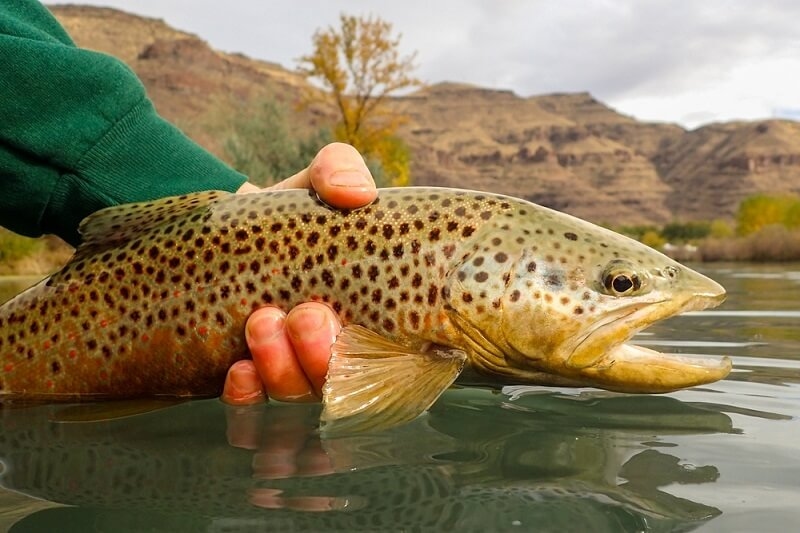
Trout fishing rivers are some of the more exciting and rewarding freshwater environments to have fun in for anglers across the United States. From mountain-fed streams to winding valley rivers, trout fishing rivers offer clean water, scenic beauty, and challenging fishing conditions. Understanding trout river habitats, cold-water trout behavior, and how trout respond to changing currents is key to success on the water. Whether you are seeking to explore for the first time fly fishing trout rivers, or searching for the best trout streams in America, this guide delivers expert-level insight grounded in real fishing experience.
Trout fishing rivers support diverse trout species, thrive in cold water trout environments, and demand precise techniques. This trout behavior guide will help you identify where trout hold, why they move, and how to fish trout in rivers more effectively in any location.
Trout fishing rivers are the perfect set of conditions trout require to survive and propagate. Flowing, oxygen-rich water is the most crucial feature concerning cold water trout, particularly in the warm months. Most trout fishing rivers are the result of mountain snowmelt, natural springs, and forested watersheds with consistent temperatures.
Healthy trout river habitats include gravel bottoms for spawning, deep pools for shelter, and riffles that carry food downstream. In most trout fishing rivers, it's all about the structure. Trout position themselves behind rocks, near undercut banks, and along seams where fast and slow water meet.
Because trout fishing rivers are constantly refreshing their oxygen levels, trout become stronger and even more selective. Anglers who understand these river habitats of trout gain a major advantage when reading the water and presenting flies or lures.
Habitat directly influences where trout hold and feed throughout the day in a trout river. The diversity of habitats in trout fishing rivers creates predictable patterns of trout. Riffles supply insects, runs offer feeding lanes, and pools provide safety from predators.
Cold water trout prefer areas where the water temperatures stay between 50°F–65°F. During summer, trout move into shaded banks or to deeper pools within a trout fishing river. During spring and fall, trout disperse into faster water and feed aggressively.
Successful anglers study trout river habitats closely. Understanding how trout relate to structure, depth, and current speed helps to pinpoint fish with consistency across the best trout streams nationally.
Cold water trout cannot survive in warm, stagnant water. That is why cold-temperature rivers with a steady flow have supported strong populations of trout. Rivers sourced from snowmelt, springs, or high elevations create ideal cold water trout conditions.
In trout fishing rivers, temperature stability is more important than the sheer volume of water. Even smaller rivers can become premier trout fisheries if cold water trout have access to shaded cover and deep refuge.
This trout behavior guide focuses on monitoring seasonal temperature changes. As water warms, trout move vertically and laterally within trout fishing rivers to remain comfortable and conserve energy.
Understanding the principles of a trout behavior guide is paramount for river success. Trout fishing in rivers requires trout to balance feeding opportunities with energy conservation at all times. Facing upstream allows food to drift naturally toward the trout.
With fly fishing in trout rivers, the trout behavior becomes more predictable: fish hold in current seams, tailouts, and behind obstacles where food funnels right into their feeding zone.
Weather, light conditions, and water clarity are all determining factors in the behavior of trout. The clear trout fishing rivers make trout cautious, while slightly stained water makes them feed with aggression. Learning such cues helps the anglers to change presentations effectively.
The best trout streams have similar commonalities: cold water trout populations, healthy insect life, and protected trout river habitats. The more famous trout fishing rivers include the Madison River in Montana, the Delaware River in New York, the Green River in Utah, and the White River in Arkansas.
These best trout streams offer consistent flows, excellent habitat structure, and strong conservation practices. While iconic rivers attract anglers from all over the world, numerous other, less famous trout fishing rivers offer equally productive fishing with less pressure.
It is often one of these so-called 'also-ran' regional trout fishing rivers that truly holds inevitable surprises. With a bit of local knowledge and careful exploration, hidden gems might be found.

One of the more precise ways, and most rewarding, to catch trout is fly fishing in trout rivers. Since the main food of trout is aquatic insects, fly fishing on trout rivers allows anglers to represent natural food sources more accurately.
Fly fishing excels at catching trout in riffles and runs where they intercept drifting insects. Dry flies, nymphs, and streamers all have critical roles depending on the water conditions and how the trout are behaving.
Fly fishing trout rivers also sharpens reading water skills. Anglers are taught to observe currents, insect activities, and trout movements a little more closely than with other methods.
Seasonal changes drastically affect the trout rivers. During the spring months, high flows spread trout out over the entire system. In summer, trout congregate in cold water trout refuges such as deep pools and shaded banks.
Fall brings aggressive feeding as trout prepare to spawn. Many of the best trout streams fish exceptionally well during this time of year. Winter trout fishing in rivers requires slow presentations as the trout's metabolism decreases.
The emphasis that this trout behavior guide places on adapting tactics to the season depends on the position regarding how trout respond to environmental shifts. Successful anglers adjust fly selection, depth, and speed according to how trout are responding to changes in their environment.
Fishing gear selection should be made to suit the characteristics of trout fishing rivers. Light to medium-action rods enable proper presentations and a delicate drift. In fly fishing for trout rivers, conditions are usually met with 4–6 weight rods.
Smoother drag reels aid in protecting light tippets when fighting strong, cold-water trout. Waders and boots with solid traction improve safety and mobility in rocky trout river habitats.
This selection means, in the best streams for trout, one can have better control, presentation, and landing.
Reading water separates average anglers from experts. In trout fishing rivers, trout hardly ever hold randomly. Rather, they position themselves where the current delivers food efficiently.
Look for seams, eddies, drop-offs, and submerged structure. These features produce trout in all types of trout river habitats consistently. Subtle surface disturbances and bubble lines are often what the fly-fishing technique for trout rivers requires.
Mastering water reading skills greatly improves success on both familiar and new trout fishing rivers.
Healthy trout fishing rivers require responsible angling and conservation efforts. Catch-and-release practices in pressured fisheries help maintain cold-water trout populations.
Preservation of riparian zones preserves shading and bank stabilization, which are important to trout river habitats, as well as provides trees for shade. In fact, many of the finest coldwater trout streams benefit from habitat restoration, flow regulation, and pollution control.
Of course, anglers are very important to sustaining the rivers through which trout fishing goes on by complying with regulations and minimizing environmental impacts.
Trout fishing rivers offer unparalleled opportunities to anglers acquainted with habitat, behavior, and seasonal patterns. By studying the habitats of trout rivers, mastering fly fishing in trout rivers, and respecting the cold water needs of trout, anglers can achieve consistent success. The best trout streams reward patience, observation, and conservation-minded fishing-like techniques that will keep these rivers productive for generations to come.
Ideal rivers for trout fishing would have cold water trout conditions, a constant flow, gravel bottoms, plenty of insect life, and healthy trout river habitats that provide feeding, shelter, and spawning.
Cold water trout need oxygen-rich water. As temperatures go up in trout fishing rivers, the oxygen level decreases, and thus forces trout to head deeper into pools or darker areas just to survive.
This makes fly fishing trout rivers more natural presentations, predictable trout behavior, and consistent feeding lanes in comparison to still waters, particularly in the best trout streams.
Current seams, riffles, deep pools, undercut banks, and structure are the elements that concentrate both food and shelter for trout in trout fishing rivers.
Early morning and late evening are best, particularly during the warmer months. Seasonal timing depends on water temperature, insect activity, and trout behavior patterns.
This content was created by AI