

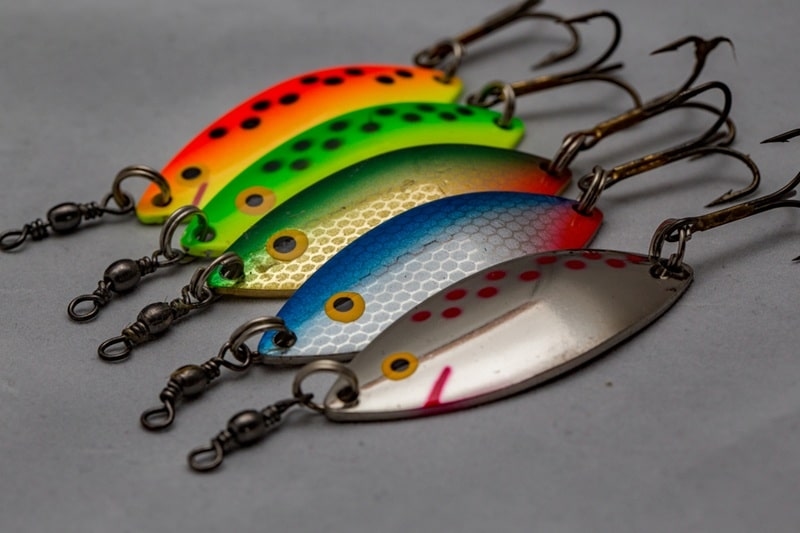
Successful fishing does not depend entirely on casting bait into the water and waiting for fish to come. Knowledge of types of fish lures and how they correlate with fish behavior and various conditions in water can significantly improve one's catch rate from anywhere in the USA.
This artificial lures guide takes you through the details of how popular lures react, when to use them, and why fish react to them the way they do. Matching your action to that of the fish is the key to intelligent fishing. You can also master the art of choosing the right lure for your fishing needs, from spinnerbaits to crankbaits.
Fish are cold-blooded animals; their metabolism rates are related to the temperature of the water their bodies are in. When in warmer water, fish such as bass, walleye, and trout become aggressive and will pursue their next meal easily when given a possible target. When in cold environments, fish tend to conserve their energies and often prefer their source of food to be slow-moving.
Light intensity, water clarity, availability of prey, and fishing pressure can also determine fish behavior in regards to lure types. A lure, which is effective in clouded water, may not work well in clear water. A rapidly moving lure may provoke reaction bites in one day but not on another.
A good artificial lures guide will include not just information on lure types, but the context in which the lure is to be used as well. Here is a glimpse of it.
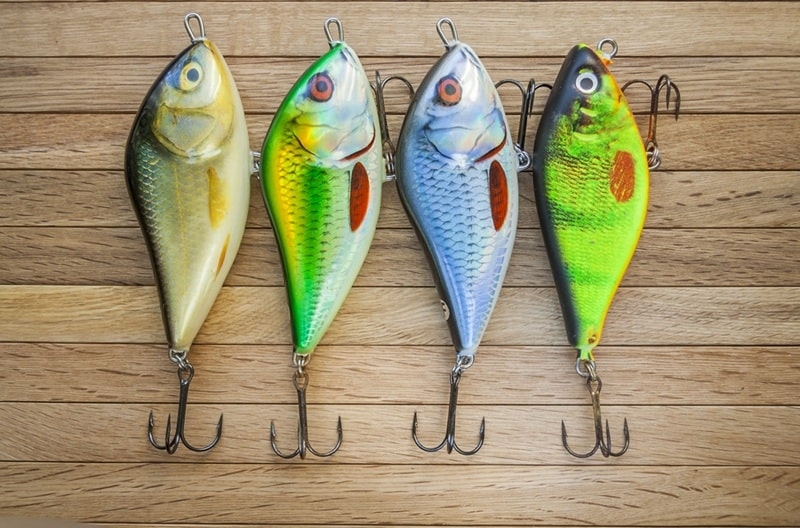
Crankbaits are among the most diverse and popular fishing lure used in fishing undertaken within America. Crankbaits are hard lures that are made to resemble baitfish and give tremendous vibration as they move in the water. This wobbling motion is what triggers the instinctual response of the targeted species, including largemouth bass, smallmouth bass, and pike.
In situations where the fish are being pressured, lethargic, and very cautious while feeding, soft plastics generally outperform hard plastics. The flexible plastics mimic worms, crayfish, lizards, and baitfish with incredible natural actions. The softness of these plastics makes the hooked fish hold longer.
Spinnerbaits are made to offer a combination of flash, vibrations, and profile all in one very effective lure. Being equipped with one or more spinning blades, these fishing lures serve as a sight and feel trigger that attracts fish even in conditions of poor visibility. Fish aggressively react to spinnerbaits.
Spinnerbaits are highly popular in the USA since they are able to fish through cover. The wire frame makes it easy for the bait to deflect off logs, rocks, and plants. Therefore, this lure is best for fishing in shallow water with a good amount of structure present underwater.
The conditions of water also contribute to determining the favored lure to use in order to get successful catches.
Depth is also another crucial element. It is likely that shallow fish, which live in close proximity to the water's surface, may be effectively hooked using shallow diving crankbaits or spinnerbaits. As usual, ecological factors will also form a crucial basis of every authentic artificial lures guide.
The seasonality also exercises a profound influence on fish behaviors, which are further responsible for determining specific lures that could be useful for fishing.
The capacity to point out this knowledge is among the most valuable fishing lure secrets you will ever hear.
The premise of copying the forage found locally while lure fishing is very easy to understand. What this means is that the fish found within a body of water have been trained to feed on things like shad, bluegill, crawfish, or minnows. By using lures with similar forage, an individual will have a better chance of hooking a fish.
The choice of lures may pose a challenge to beginners.
What's sad about this is the fact that most fishermen complain about luck rather than about mismatching the lures.
Mastering fishing lure types is a whole lot more than simply knowing the names. A deep knowledge of fishing lure types allows you to incorporate lure presentations into real-world fishing conditions.
Fish behave differently in varying conditions of temperature, transparency, depth of water, seasons, and feeding behaviors. You should select a lure that imitates what fish would like to see and how they can expect it to move.
Beginner fishermen should simply begin with very adaptable types of fishing lures like spinners and soft lures. Fishing lures like spinners and soft lures will perform well under very varying conditions and will tolerate speed and technique not being absolutely precise. Of course, a better selection based on an artificial lures guide will simply expedite fishing success.
Crankbaits will perform well for highly active and aggressive fish behaving like predators chasing down a meal like in warmer water conditions or water with low visibility. Soft lures will perform well for highly pressured fish in very cold water conditions or fishing in water where the fish react very slowly. Any fundamental fishing lure guide will immediately tell you that lures should always change based on fishing lure reaction.
Yes, spinnerbaits will indeed work well in very clear water conditions. Just decrease the size and blade. Spinnerbaits will indeed work exceptionally well in very stained or very muddy water. With this fundamental change, you will quickly discover how simply adaptable fishing lure types will really make you into a fishing pro.
This content was created by AI